


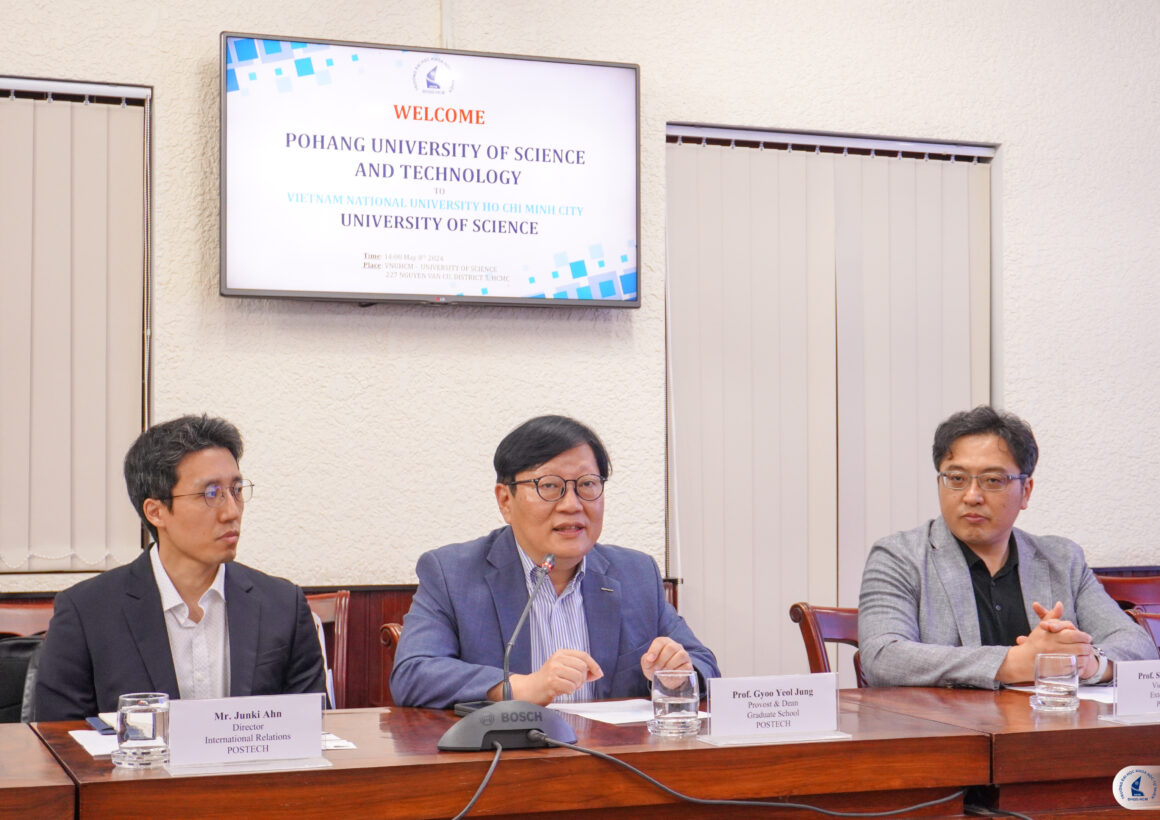
On 8 May, the VNUHCM-University of Science (HCMUS) welcomed a delegation from Pohang University of Science and Technology, Korea (POSTECH).
The representatives from POSTECH included Prof. Gyoo Yeol Jung, Provost and Dean of the Graduate School; Prof. Park Sung Min, Executive Vice President of External Relations and Communications; Mr. Junki Ahn, Director of International Relations; and Ms. Jinyoung Huh, Manager of International Relations.
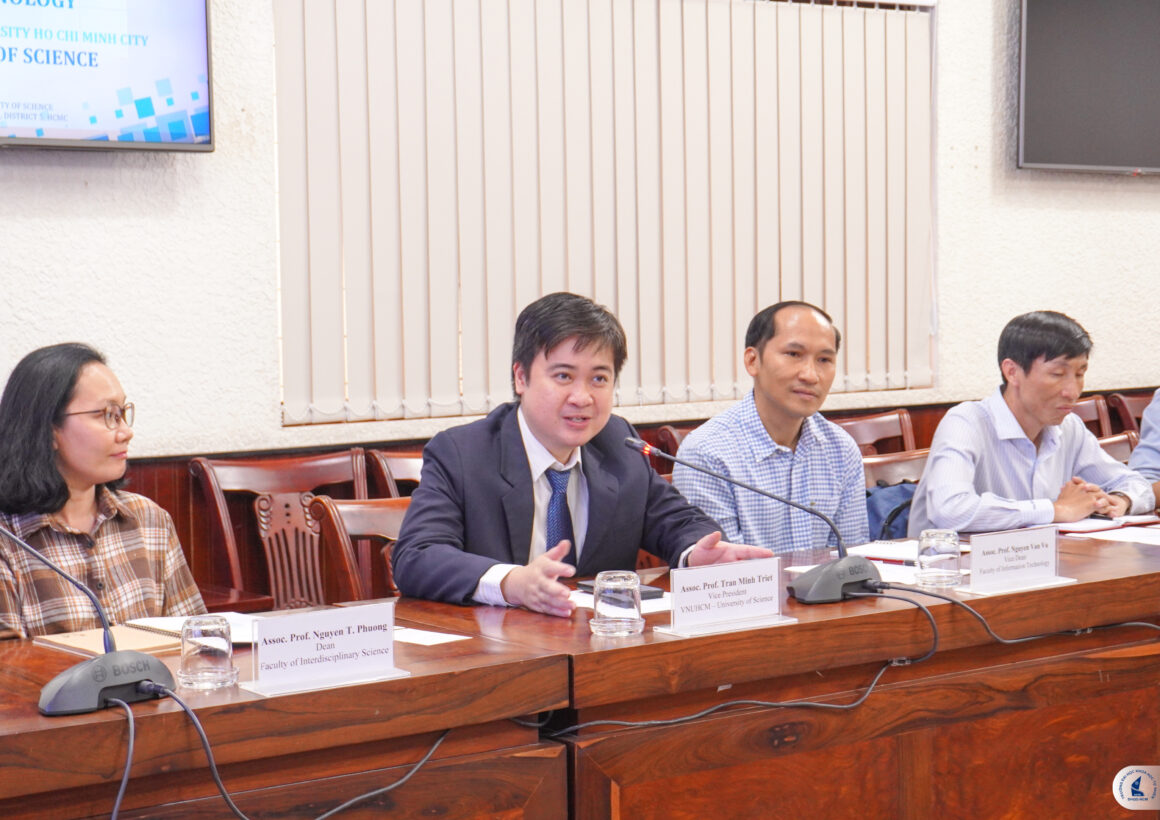
The representatives from HCMUS comprised Assoc. Prof. Tr廕吵 Minh Tri廕篙, Vice President; Assoc. Prof. Ng繫 ��廕【 Nghi廙�p, Head of the Office of External Relations; Assoc. Prof. Nguy廙�n Tuy廕篙 Phがヾng, Dean of the Faculty of Interdisciplinary Science; Assoc. Prof. Nguy廙�n V��n V觼, Vice Dean of the Faculty of Information Technology; Assoc. Prof. Tr廕吵 Thi廙�n Thanh, Vice Dean of the Faculty of Physics ��� Engineering Physics; and Dr. Nguy廙�n Phが廙�c Trung H簷a, Vice Dean of the Faculty of Materials Science and Technology.
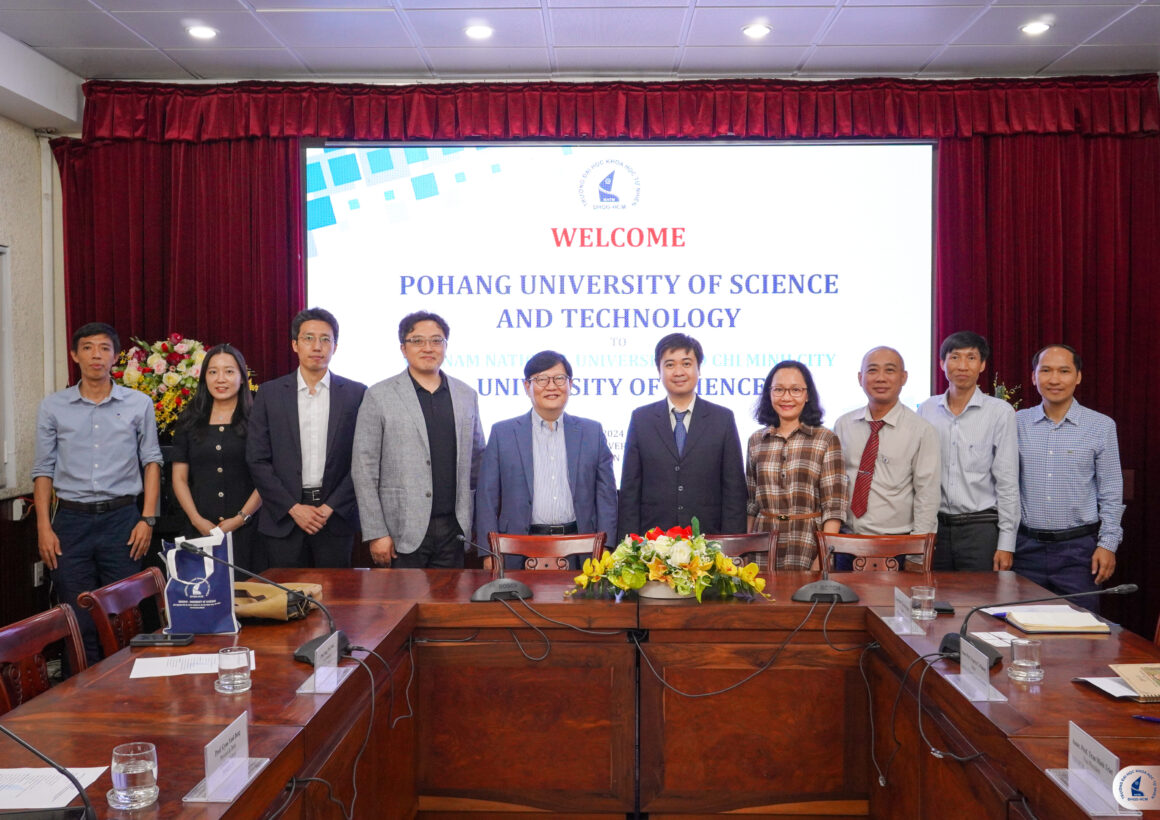
POSTECH is a private university located in Pohang-si, South Korea, with a specific emphasis on science and engineering. The university’s primary objective is to make significant contributions to the advancement of Korea and the global community through comprehensive research in these fields. POSTECH has actively engaged in collaborative efforts with industry, academia, and research institutions to translate research outcomes into practical applications effectively, thereby establishing itself as a premier global materials research centre.
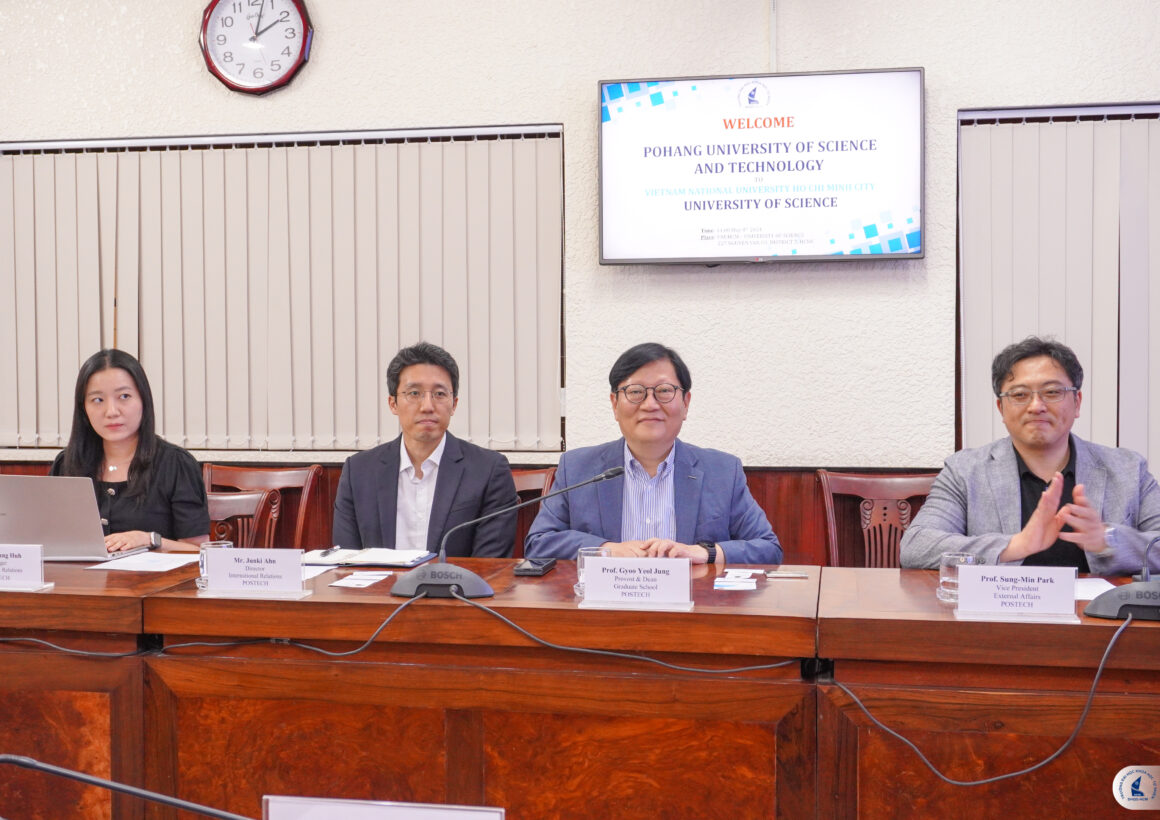
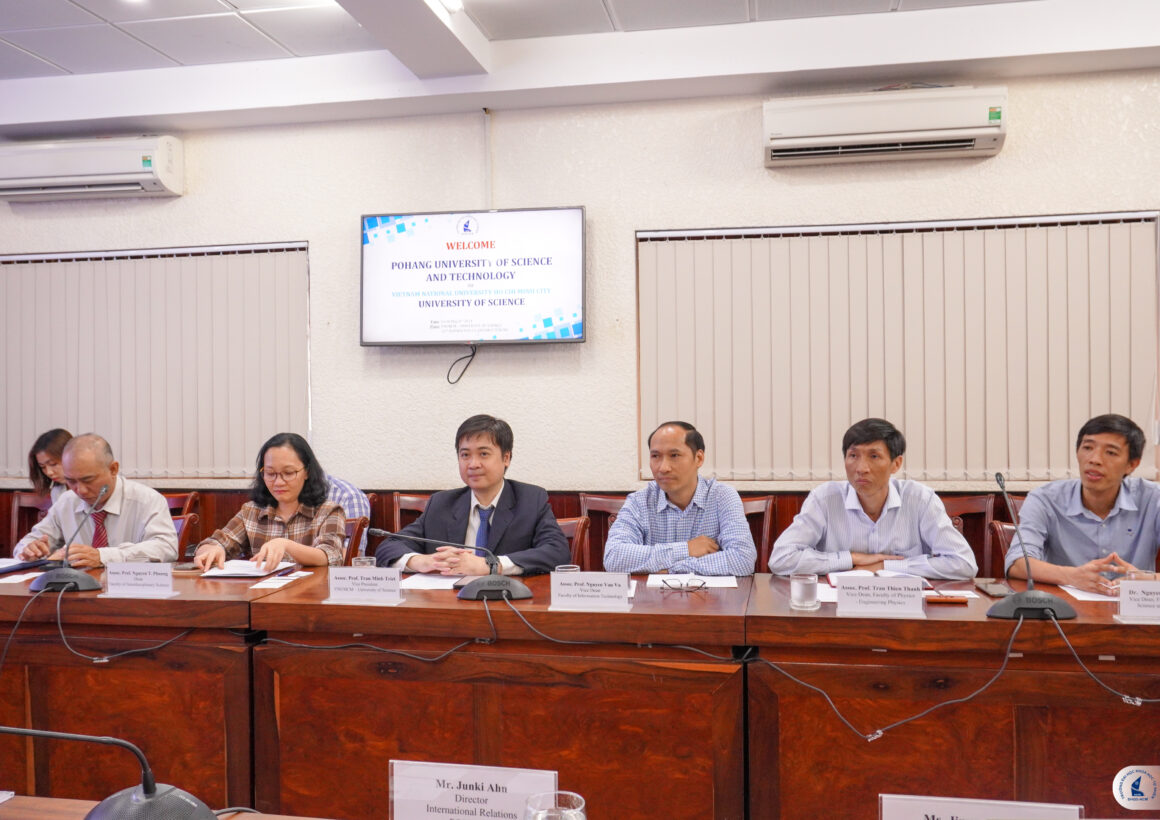
The meeting between VNUHCM-University of Science and POSTECH University aimed to establish a sustainable and mutually beneficial cooperative relationship in the realms of education and research. The key points of discussion included:
– The collaborative exchange of students, educators, and postgraduate scholars.
– Joint supervision of student training under Project 89, which catered to postgraduate students.
– Co-guidance and oversight of postgraduate scholars to foster a robust research alliance between POSTECH and HCMUS.
– Securing financial backing from companies, enterprises, and prominent conglomerates such as the POSCO Group, Samsung, and the governments of both nations.
– Financial support for professors, students, and postgraduate scholars from both universities.
– Implementation of scholarship programmes (e.g., in Chemistry, Physics ��� Engineering Physics, etc.) along with infrastructure and analytical facilities.
– Advancement of collaborative research and development in semiconductors and nuclear engineering, particularly in the area of nuclear power stations.
– Arranging and jointly hosting seminars, discussions, and active participation in scientific conferences and symposiums (e.g., PIN 2024) as speakers and guests.
– Exploring other potential collaborative activities.
Leave a Reply